Bit Depth is a commonly advertised specification of scanners. It is the scanner's ability to accurately analyze and reproduce the full color spectrum of the scanned information.
Let's start off with a black and white scanner:
A 1 Bit scanner would simply be black or white, with nothing in between. No shades of gray
would be produced, only black or white. ( =2 shades)

1 Bit "Line Art"
A 2 bit scanner would only produce four shades of gray ( =4 shades)
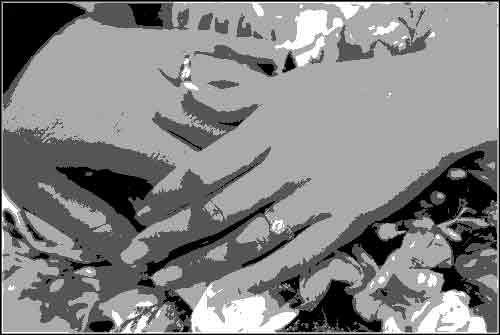
2 Bit Grayscale
A 4 Bit scanner would produce 16 shades of gray. ( =16
shades)
=16
shades)
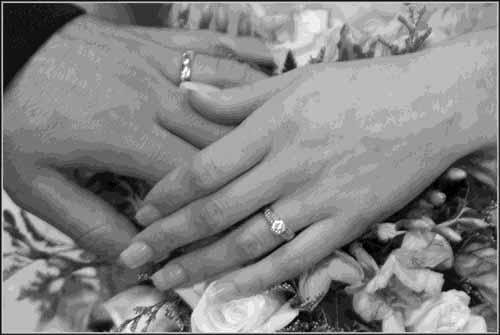
4 Bit Grayscale
An 8 Bit scanner would produce 256 shades of gray. ( =256
shades)
=256
shades)
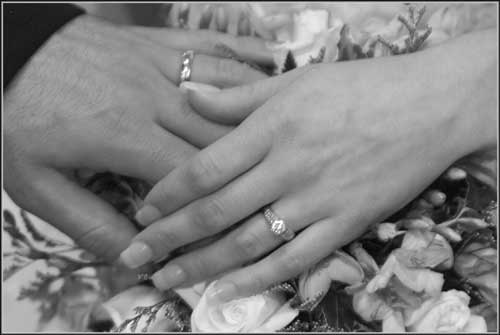
8 Bit Grayscale
When applying the same principal to color scanning, you must remember that there are
three channels of color (RGB = Red, Green, Blue). Therefore, a 24 Bit scanner is actually
three separate color channels of 8 Bits each (256 shades of red, 256 shades of green, 256
shades of blue). The total color range available with a 24 Bit scanner is 16.8 million
colors. ( =16,777,216 colors)
A 30 Bit scanner is made up of three 10 Bit color channels (1,024 shades of red, 1,024
shades of green, 1,024 shades of blue). The total color range available with a 30 Bit
scanner is 1 billion colors. ( =1,073,741,824 colors)
A 36 Bit scanner is made up of three 12 Bit color channels (4,096 shades of red, 4,096
shades of green, 4,096 shades of blue). The total color range available with a 36 Bit
scanner is 68.7 billion colors. ( =68,719,476,736 colors)
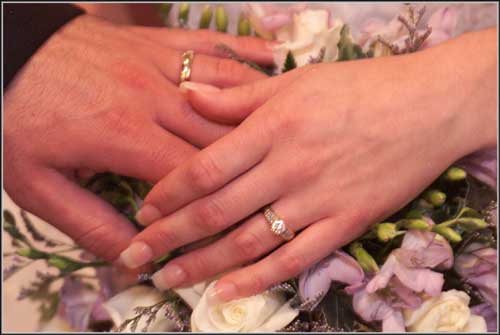
36 Bit Color

24 Bit Color
Notice how the subtle transitions of the flesh tones are lost with this limited color
palette
The higher the Bit Depth of the scanner, the more accurate and precise it becomes when analyzing available tonal information and reproducing color. Since a scanner with a higher Optical Density obtains more tonal information to analyze and reproduce, it is more precise. Data that was never obtained can not be analyzed and reproduced.